
Gambling advertising: the unresolvable debate?
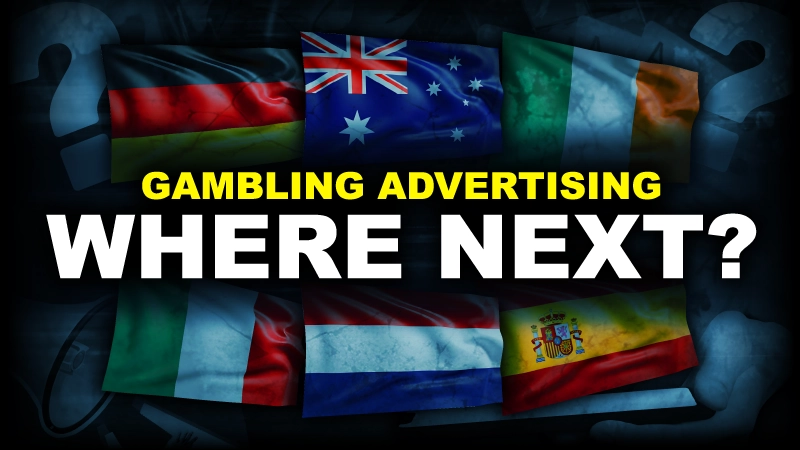

It seems like week in week out, we see gambling advertising hitting the headlines. It’s an easy target because of its inherent visibility, but how damaging and influential is it? Are the attacks on gambling advertising borne from genuine concern, or is it more political than that? In this Slot Gods Insights article Claudia Hartley looks at how different countries are discussing and managing the increasingly contentious issue of advertising in gambling.
Ireland; a call for a gambling advertising ban
Irish Labour leader Ivana Bacik has called for a complete ban on gambling advertising. She describes current practices as ‘deeply concerning’ after spotting an advert at a BoyleSports betting shop – and she’s right, this advert was concerning. It promoted account sign ups for those without a bank account, pretty much directly targeting people who may well be more vulnerable.
For me though, this feels a bit like when a teacher would make the whole class stay behind because one student had misbehaved. That BoyleSports advert should be made an example of, because despite Boylesports’ claims that it is within guidelines, it really does feel like preying on the vulnerable. But should there be a total ban on all gambling adverts? Ivana Bacik thinks so.
The Australian situation
Australia is often cited as a country on the brink of a gambling advertising ban, but the reality is a little more nuanced. While there have been increasing calls to limit, or entirely phase out gambling advertising, including the proposed Interactive Gambling Amendment (Ban Gambling Ads) Bill 2024, there are currently no formal plans for a nationwide ban.
Prime Minister Anthony Albanese has been clear that the government’s focus is on harm minimisation rather than sweeping prohibition. The concern is that blanket bans could push consumers towards unregulated offshore operators. Instead, Australia continues to pursue targeted regulation, stricter enforcement, and product-specific controls.
While this approach doesn’t quite grab headlines in the same way, it chooses to prioritise containment instead. With Australia being some of the biggest gamblers in the world (in terms of spend per head) this quieter approach may be something for other countries to consider.
Europe
Looking at the effect that total and partial gambling advertising bans have had in some countries can help to give an indication of what might happen if others choose to make further restrictions. Below are European countries that have seen differing results.
Netherlands
The Netherlands has taken one of Europe’s toughest stances. Since 2023, untargeted gambling advertising has been banned across TV, radio, print, public spaces, and transport, with sponsorship bans following in 2025.
Early evidence suggests there’s been a sharp reduction in visible advertising and promotional spend. However, there is limited public data on whether this has translated into lower gambling participation or harm, particularly online, where targeted marketing still exists.
Italy
Italy’s 2018 Dignity Decree introduced an almost total advertising ban. While it successfully removed gambling branding from mainstream media and football sponsorships, subsequent analysis suggests problem gambling rates did not meaningfully decline.
More concerning still, industry bodies and regulators have warned that the ban coincided with growth in unregulated and black-market gambling. This growth has led to discussion on whether parts of the ban should actually be rolled back.
Spain
Spain’s Royal Decree 958/2020 significantly restricted advertising and bonuses when it was first implemented, though sections of it have been struck down since. Even so, studies indicate a notable drop in new gambling accounts and overall money wagered.
Germany
Germany has opted for tightened controls rather than outright bans, particularly around youth exposure and sports advertising. The impact has been less dramatic on the one hand, but also less disruptive.
Parallels
Across all of these countries, we can see that banning or restricting gambling advertising does lead to lower visibility. However, we can also see that smaller restrictions still lead to meaningful changes, such as a smaller spend, or fewer new accounts being made. Italy should serve as the biggest warning, where banning gambling advertising completely led to an uptick in sign-ups on the black market.
For regulators, it’s a fine line to walk. Nobody wants to send players to unregulated markets, but from a political, and headline-driven point of view, outright gambling bans make larger waves than measured cutbacks.
The ‘Ending a Losing Streak’ report (UK)
In the UK gambling seems to have become a political football. albeit with only one direction of travel.
At first glance, the 'Ending a Losing Streak' report looks damning. Gambling advertising is framed as ubiquitous and unavoidable. With emotive quotes and evidence in the form of bar charts, it seems as though this is a report that can’t be argued with. But is it?
'Ending a Losing Streak' presents a consistent argument: gambling in Britain is no longer a leisure activity. It repeatedly describes how inescapable gambling is, it’s present ‘on their high streets, on their phones, on TV’ and even embedded into things like ordering takeaway food.
This sits alongside big, bold focus group quotes on bright red backdrops: ‘There is gambling in everything that you do, and you don't realise.’
Emotive language
This language is undoubtedly effective, but it’s also unreasonably expansive. Gambling advertising is presented as uniquely invasive – is it? Aren’t we all advertised to more than ever, from all kinds of sectors and industries? The current explosion of algorithmic advertising means we see many more adverts, but also increasingly personalised ones.
The report has collected a lot of qualitative data. Yet some of the most powerful points in the report are the quotes that open each section, before any ‘hard’ data is introduced. The quotes are relatable and credible, but they lean on the side of moral framing devices, rather than being rooted in evidence.
‘So it’s the same as Drinkaware… just that constant chasing my tail, because the gambler is being told not to gamble by the gambling institution. So they're never going to be that hard hitting or make a strong enough message because they don't want people to stop gambling.’ Ann, Teacher
You can read Ending a Losing Streak here.
Alarmist? Agenda-driving?
Reading reports like ‘Ending a Losing Streak’, and similar alarmist work from University of Bristol in the UK, it’s hard to shake the sense that gambling advertising is being used as a proxy for a broader discomfort with gambling itself.
The language in both reports tends to be emotionally loaded. Words like ‘bombarded’, ‘preying’, ‘cynical’ and ‘exploitative’ don’t tend to appear in more rigorous and quantitative reports. Absolutely, concern is understandable, but word choices like this risk sliding these reports into the advocacy category – rather than analysis. This raises an uncomfortable question. Is the ultimate goal to improve safeguards, to win votes, or to make regulated gambling so restricted that it loses all legitimacy?
In many cases, this criticism appears driven more by moral unease than by the assessment of evidence. Advertising becomes an easy target, because by its very nature, it’s visible.
What if…?
Let’s imagine that regulated gambling becomes so heavily regulated, that it loses general appeal. We know from things like the prohibition era that demand doesn’t disappear, it just relocates. During prohibition this was to speakeasies or back rooms, but for gambling it’s arguably going to be worse than that.
Over regulation, like in the case of the Italian gambling ban, does lead to a move to the black market. These operators don’t have to abide by advertising rules, sure. But more than that, they don’t have to abide by any rules. There’s no legal framework, no oversight, no standards at all. They can offer bigger bonuses, fewer checks, and absolutely no accountability.
This is an extreme example, but not an impossible one. The guidelines for gambling advertising should enable the legal gambling industry to outcompete the illegal one – or we risk making things much worse for the very people we claim we’re trying to protect.
Summary
Gambling advertising is an easy target. It’s highly visible, emotionally charged, and politically an easy win. There are absolutely credible reasons to limit it, particularly where exposure is excessive or poorly controlled. But, evidence overwhelmingly shows that blunt bans rarely deliver the outcomes intended.
When regulation tips over into prohibition, demand doesn’t vanish, it just moves elsewhere. The real challenge is how to regulate this part of the industry in a way that reduces harm without undermining the legal market that proper safeguards depend on.